PassingBy
Scope
System and Interface Design
Client
Graduate Project
Year
[2026]
Industry
UX/UI and Consumer Electronics
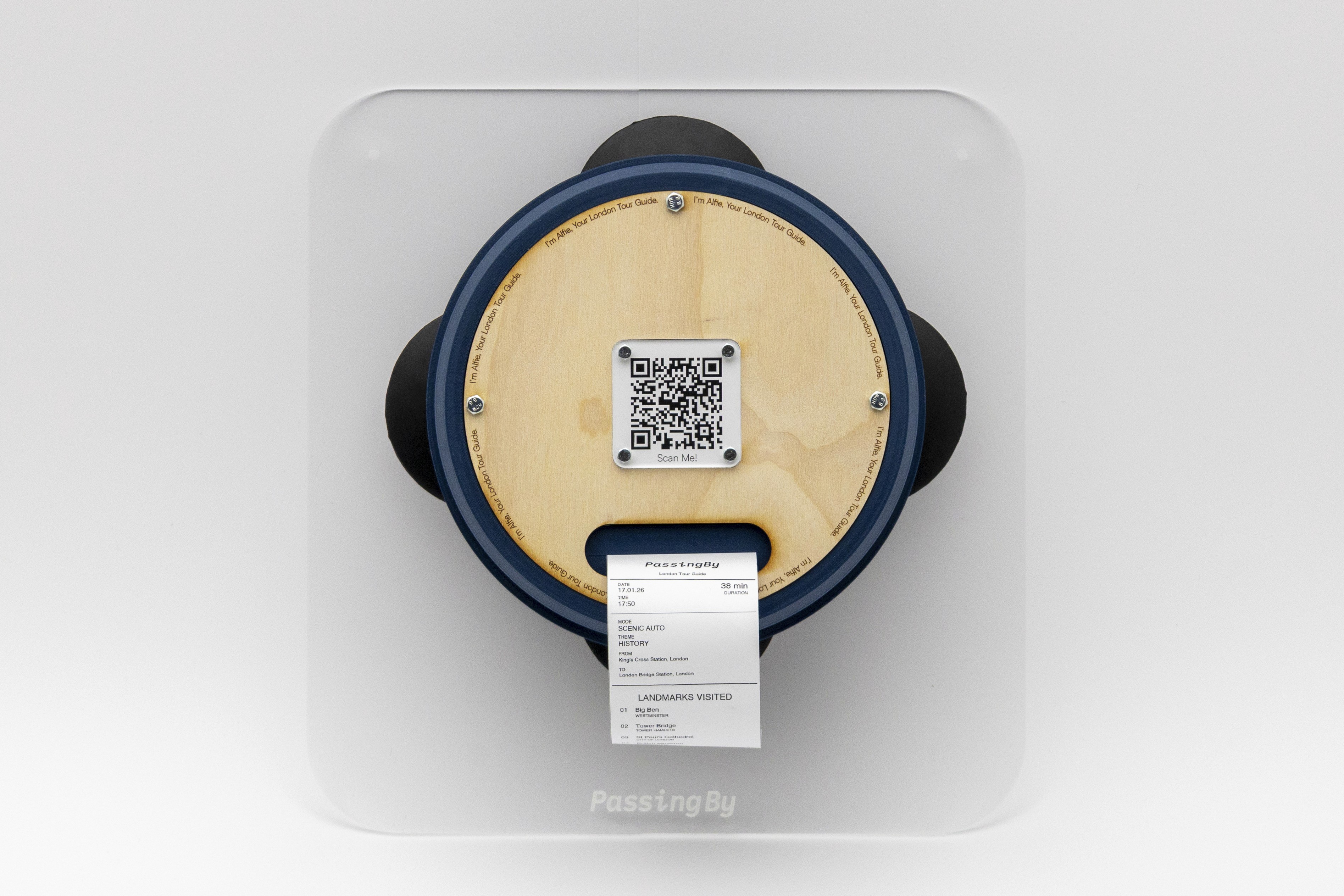
PassingBy transforms London journeys into living history lessons. Using built-in speakers, the passengers hear micro stories and fun facts triggered in real time, each one telling a story of the exact location visible from their window. From iconic sights like Big Ben and the London Eye, to hidden gems like Little Dean's Yard that even lifelong Londoners rarely know about, PassingBy is designed for tourists, locals, and everyone in between. It turns an ordinary commute into something memorable, making the city's stories accessible to all.
Context
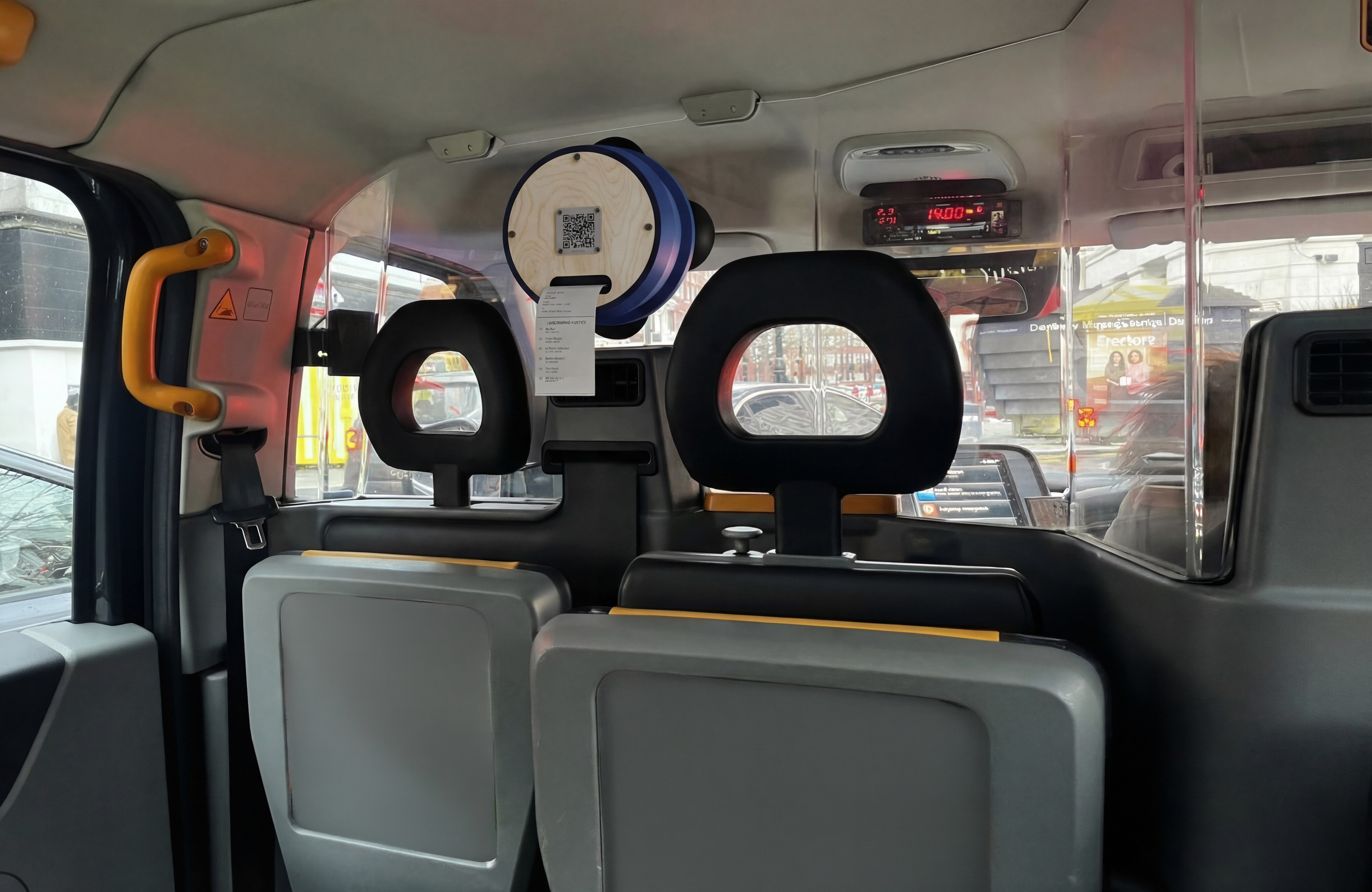
London taxi journeys are an overlooked in-between moment — passengers are stationary, often alone, with little to anchor them to the city passing outside the window. PassingBy was designed to fill that gap, turning the route itself into the content. The brief was self-initiated: use the Black Cab's fixed ecosystem and London's extraordinary density of history to make journeys feel less transactional.
Approach
The core design challenge was making something that felt effortless to experience while being technically complex underneath. A custom database of 1,400 London landmarks was built using Open Street Map, Wikipedia, and Google Places data, structured modularly so it can be extended without rebuilding. AI-generated narration through OpenAI and ElevenLabs allowed stories to be produced at scale without losing a consistent voice. Google Maps provided the location backbone, chosen deliberately for its compatibility with existing cab hardware.
The stories themselves required a distinct editorial decision: they had to work for a tourist hearing about Smithfield Market for the first time and for a Londoner who's passed it a hundred times. The solution was multiple thematic layers per landmark — the same location tells different stories on different journeys.
Outcome
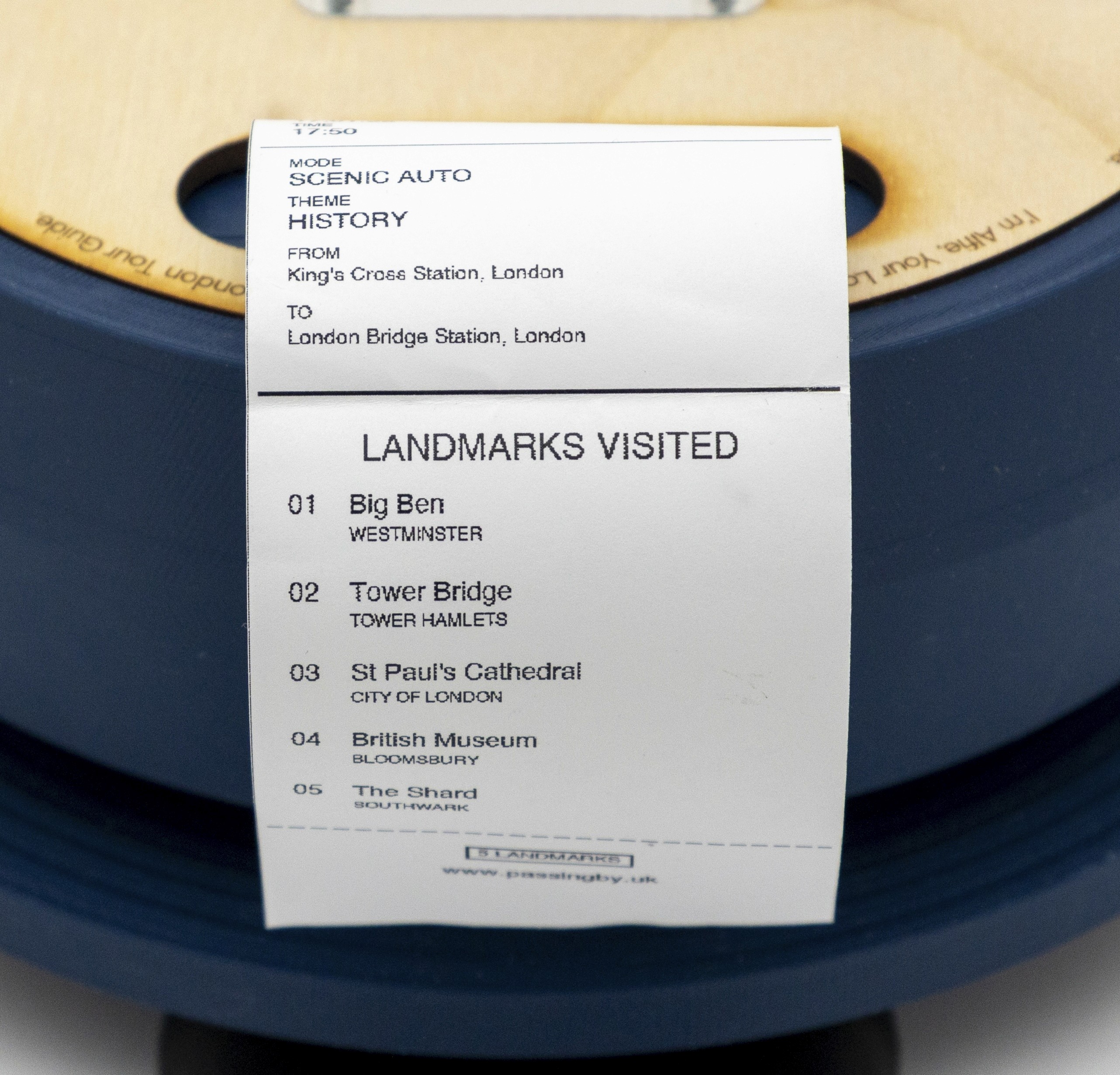
PassingBy works as a live web app, accessible by passengers via QR code during the journey. The result is an experience that rewards curiosity without demanding attention — stories play as landmarks approach and fade as the cab moves on. The modular database structure means the system grows with the city rather than becoming static.
Check out the web app for yourselves by scanning the QR code using your phone.


PassingBy
Scope
System and Interface Design
Client
Graduate Project
Year
[2026]
Industry
UX/UI and Consumer Electronics
PassingBy transforms London journeys into living history lessons. Using built-in speakers, the passengers hear micro stories and fun facts triggered in real time, each one telling a story of the exact location visible from their window. From iconic sights like Big Ben and the London Eye, to hidden gems like Little Dean's Yard that even lifelong Londoners rarely know about, PassingBy is designed for tourists, locals, and everyone in between. It turns an ordinary commute into something memorable, making the city's stories accessible to all.
Context
London taxi journeys are an overlooked in-between moment — passengers are stationary, often alone, with little to anchor them to the city passing outside the window. PassingBy was designed to fill that gap, turning the route itself into the content. The brief was self-initiated: use the Black Cab's fixed ecosystem and London's extraordinary density of history to make journeys feel less transactional.
Approach
The core design challenge was making something that felt effortless to experience while being technically complex underneath. A custom database of 1,400 London landmarks was built using Open Street Map, Wikipedia, and Google Places data, structured modularly so it can be extended without rebuilding. AI-generated narration through OpenAI and ElevenLabs allowed stories to be produced at scale without losing a consistent voice. Google Maps provided the location backbone, chosen deliberately for its compatibility with existing cab hardware.
The stories themselves required a distinct editorial decision: they had to work for a tourist hearing about Smithfield Market for the first time and for a Londoner who's passed it a hundred times. The solution was multiple thematic layers per landmark — the same location tells different stories on different journeys.
Outcome
PassingBy works as a live web app, accessible by passengers via QR code during the journey. The result is an experience that rewards curiosity without demanding attention — stories play as landmarks approach and fade as the cab moves on. The modular database structure means the system grows with the city rather than becoming static.
Check out the web app for yourselves by scanning the QR code using your phone.
PassingBy
Scope
System and Interface Design
Client
Graduate Project
Year
[2026]
Industry
UX/UI and Consumer Electronics
PassingBy transforms London journeys into living history lessons. Using built-in speakers, the passengers hear micro stories and fun facts triggered in real time, each one telling a story of the exact location visible from their window. From iconic sights like Big Ben and the London Eye, to hidden gems like Little Dean's Yard that even lifelong Londoners rarely know about, PassingBy is designed for tourists, locals, and everyone in between. It turns an ordinary commute into something memorable, making the city's stories accessible to all.
Context
London taxi journeys are an overlooked in-between moment — passengers are stationary, often alone, with little to anchor them to the city passing outside the window. PassingBy was designed to fill that gap, turning the route itself into the content. The brief was self-initiated: use the Black Cab's fixed ecosystem and London's extraordinary density of history to make journeys feel less transactional.
Approach
The core design challenge was making something that felt effortless to experience while being technically complex underneath. A custom database of 1,400 London landmarks was built using Open Street Map, Wikipedia, and Google Places data, structured modularly so it can be extended without rebuilding. AI-generated narration through OpenAI and ElevenLabs allowed stories to be produced at scale without losing a consistent voice. Google Maps provided the location backbone, chosen deliberately for its compatibility with existing cab hardware.
The stories themselves required a distinct editorial decision: they had to work for a tourist hearing about Smithfield Market for the first time and for a Londoner who's passed it a hundred times. The solution was multiple thematic layers per landmark — the same location tells different stories on different journeys.
Outcome
PassingBy works as a live web app, accessible by passengers via QR code during the journey. The result is an experience that rewards curiosity without demanding attention — stories play as landmarks approach and fade as the cab moves on. The modular database structure means the system grows with the city rather than becoming static.
Check out the web app for yourselves by scanning the QR code using your phone.